Optical Filters for Underwater Imaging
Underwater imaging is strongly affected by absorption and scattering in water. Optical filters help manage color loss, suppress unwanted infrared or haze-like background, and improve contrast when cameras are used for diving, inspection, marine observation, or underwater machine vision.
Recommended Product Categories
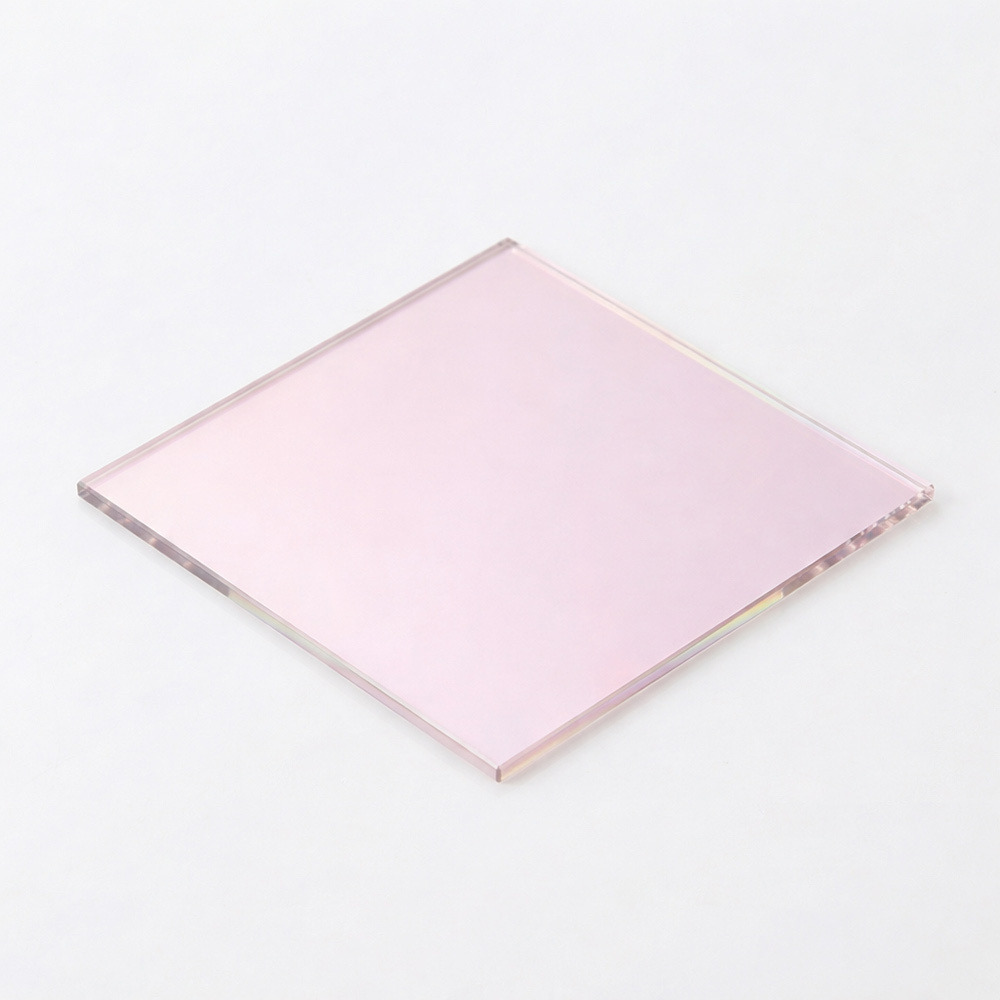
Spectral Correction Filters
Useful for underwater color balancing and for improving visible-band contrast in task-specific imaging setups.

UV/IR Cut Off Filters
Helpful when the system should remain focused on the visible band and reject unwanted UV or IR response.

Longpass Filters
Useful in selected underwater systems that depend on controlled illumination and wavelength-specific imaging.
Why Optical Filtering Matters in Underwater Imaging
Water does not transmit all wavelengths equally. Red light is absorbed quickly, while shorter wavelengths usually travel farther. At the same time, suspended particles scatter illumination and create backscatter that lowers image contrast. This means underwater imaging problems are often optical-path problems before they become camera or software problems. In underwater imaging, filters are selected as part of the environment-specific optical strategy rather than as generic camera accessories.
Color Recovery
Correction filters can help compensate for the spectral imbalance created by water absorption and improve perceived scene realism.
Backscatter Management
Cutoff and contrast-oriented filtering can reduce the amount of unwanted light reaching the detector in hazy water conditions.
Scene Contrast
Matching the filter to the task helps important structures stand out more clearly against a low-contrast aquatic background.
How Filters Are Used in Underwater Imaging Systems
Illumination Path
When strobes or lamps are used, filters can shape the emitted light so the subject is illuminated in a more useful spectral range before the reflected light returns through the water column.
Imaging Path
Filters placed in front of the camera lens help control which wavelengths reach the sensor. This can improve color balance, suppress unwanted infrared, or emphasize the spectral region most useful for the imaging task.
Common filter types for underwater imaging
Spectral Correction Filters help compensate for underwater color imbalance by shaping the visible spectrum reaching or leaving the camera system. They are often used when more natural-looking color or better feature separation is needed. UV/IR Cut Off Filters help confine the camera response to the visible range when unwanted ultraviolet or infrared content would reduce accuracy, especially in systems that are not designed to interpret those bands. Longpass Filters are sometimes useful when the task requires emphasizing a specific wavelength region or pairing the camera with controlled illumination. Their value depends strongly on the water type and system design.
Key Design Considerations
Begin with the Water Conditions
Clear ocean water, green coastal water, and turbid industrial water behave differently. Filter selection should be based on the actual environment rather than a generic underwater assumption.
Choose Around the Illumination Method
Ambient-light diving photography and actively illuminated ROV inspection are different optical problems. The best filter choice depends on where the useful light is coming from.
Avoid One-Size-Fits-All Expectations
No single filter restores all colors or solves all scatter problems at every depth. Good underwater optical design is usually a compromise optimized for a specific task.
Frequently Asked Questions
Why do underwater images often look blue or green?
Water absorbs longer wavelengths such as red more quickly than shorter wavelengths, so the remaining light is often dominated by blue-green content as depth increases.
Can one correction filter work for every underwater scene?
Usually not. Water clarity, depth, lighting method, and subject distance all change the optical problem, so the best filter depends on the actual environment.
Do filters eliminate backscatter completely?
No. Backscatter is caused by light scattering from particles in the water. Filters can help improve contrast, but lighting geometry, distance, and water conditions still matter a great deal.
Why use UV/IR cutoff in underwater systems?
Many underwater cameras are intended to capture visible detail. Limiting unwanted ultraviolet or infrared response can help maintain more predictable image behavior and color balance.
